Image

Image
Fight Club (1999 David Fincher)
Showing posts with label Collective Identity. Show all posts

Friday, 29 April 2016

i-D Magazine - what these iconic photos of 90s teens in their bedrooms can teach us about being young today


"Perhaps because there's such a physical component of identity formation in the 90s images, while teens today might accomplish that more online.But it's very different when you're describing your various identities on digital platforms to when someone is in your space asking you things. The pressure of constructing multiple identities online is a very different kind of pressure, because you're aware of how you're being seen, so you can curate a self for each site and do it multiple times a day. It requires self-consciousness; you're in charge of that persona and are trying to create a unified presence."
Really interesting glimpse into the creation of identity through objects and self vs the media.
Read the article here

(Have a great bank holiday weekend!)

Mr Lane

Friday, 26 February 2016

Essay Planning for Collective Identity

Every single essay you do for the collective identity question will require you to be able to explain how the collective identity for a group (Teenagers and Young People) is portrayed (and created) by the mainstream media today.

In other words, you will need to be able to say how young people are depicted on TV, in films and in the news.

You can then use these depictions to answer whatever question you've been asked. But you must have the examples (from two different media) for every question.


YOU NEED TO PREPARE 500 WORDS ON...

What is the depiction of young people and teenagers by the mainstream media today.


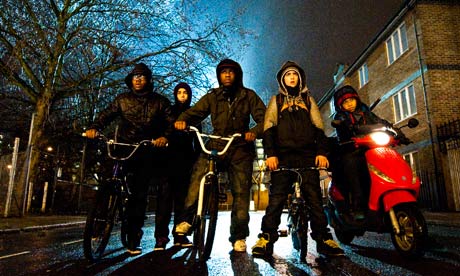
- Attack The Block
- Newspapers & TV News
- Your own examples (eg. The Inbetweeners Movie / Misfits / Bad Education)

PLAN:

- Define the stereotypical view on teenagers in the media; (antisocial, violent, apathetic, alienated) 
- Give an exemplar text that supports this. (Such as Attack the Block)
- Give specific examples from the text that support this view (or contradict it) 
- Give another exemplar text that supports this, from a different media industry. 
- Give specific examples from this text that support this view (or contradict it) 
- Explain how both texts depict identity in the same way. 

then....

YOU NEED TO PREPARE another) 500 WORDS ON...

What was the historical depiction of young people and teenagers by the mainstream media? 


- Daily Mirror "Wild Ones Invade Seaside" - 1964
- Cohen - Folk Devils & Moral Panics
- Your own examples (Quadrophenia, West Side Story, Moral Panics, etc.) 

PLAN: 

- Give an exemplar text that depicts the collective identity of young people in a way. (Such as the Daily Mirror article)
- State how the identity is being portrayed (mediated) by the text - e.g. "Wild Ones / Dangerous" 
- Give specific examples from the text. 
- Is this depiction different or similar from that of today? 


EXTRA READING AND INFORMATION:

Friday, 5 February 2016

How were teenagers historically depicted and represented by the media?

In the lesson today we studied the Daily Mirror front page reporting the Mods and Rockers disturbances in 1964 in Clacton.

Here is the front page. (Click the link for a higher quality version)


We also read Pages 23-28 of Stanley Cohen's book 'Folk Devils and Moral Panics' (1972)

You can read it here.  Remember to find the right page. We made notes to answer the question below

For homework, you need to read this article and create notes to answer the question below. 


How were teenagers and young people historically depicted, portrayed and represented in the media?

Here are the class notes that you made. 


Historical Depictions of in the media Teenagers  


EXTRA READING AND INFORMATION:


Thursday, 28 January 2016

Effects of the construction and portrayal of teen identity by the mainstream media

Here is the documentary we watched on 'Teen Trouble' 


You need to find at least three examples of newspaper stories, articles, tv programmes, or films that;

- Create a negative, or stereotypical identity of teenagers
- Use emotive, hysterical, selective, or exaggerated media language to create this identity (mediate it)
- Explain how these examples of media language create, reinforce stereotypes.\
- Think of how these examples could affect;

  • Adults and mainstream society 
  • Teenagers and adolescents 
Put these on your blog and be prepared to explain them to the class next double lesson.

- Mr Lane


Friday, 11 December 2015

Collective Identity Examples and Preparation


Today you need to complete this table  of your examples to use for the four prompt questions for the collective identity section:


Make notes and make sure you have examples from two different media, and know which examples you will use for each question.


Here is a link to the OCR website showing the past papers so you can prepare for the exam.


Thursday, 12 November 2015

To what extent is human identity increasingly mediated?

To what extent is human identity increasingly mediated? 

- Using your work from the last two lessons prepare a plan for a 500 word essay on this question.
  • Identity: - Gauntlett says for modern society; "Having an identity is a known requirement"
  • David Buckingham says "identity also implies a relationship with a broader collective or social group of some kind." 
  • Zygmut Bauman says "Identity is almost infinitely negotiable" 
  • Mediation: - De Zengotita says mediation is the process of us experiencing the world through the media, so the media must shape our identity. 
  • Mediation also means the negotiation to resolve a dispute between two things. Remember Bauman! 
  • Stuart Hall tells us that negotiation in the media - is when we interpret a media text based on ourselves and our own ideas, rather than mindlessly absorbing it.
  • So...  Mediation could be the negotiation, the process of us using the media to create our identity. 
  • Buckingham and Poletta & Jasper say that we normally create this identity using a collective (group). P&J say this identity can be created by an outsider (The Media) but the group must accept it.
  • This group can often become a subculture. 
  • Cohen says that if this group is not understood (they are Deviant) by society, they can be Demonised. This can create a moral panic against that group by the outside media. This can in return, strengthen and reinforce that group in a repeating cycle. (The media essentially publicises the deviant behaviour) 
  • Lacan says that we like to look at people like ourselves (The mirror stage). 
  • So!... 
  • Mediation could be.... our relationship with the media, how we use the media to find others like ourselves and to define who we are. (This is often how subcultures exist or are defined) 
The questions says, has this process increased or decreased? 


---

Here's the article we discussed about whether, for modern youth, subcultures have died

Here are some ideas of examples you can focus on. Think about

New Media: 

YouTube: - KSI / Zoella / PewDiePie / JennaMarbles / Other famous YouTubers that are either identified with, or where collective identity is formed as being a collection of fans (eg. PewDiePie's 'Bro Force')


Instagram: - One Direction / Taylor Swift / Justin Bieber / Essena O'Neill

Facebook / Social Media: - UniLad / LadBIBLE / VICE / IFLScience etc. / Fan Pages


Web 2.0 Sites:  - Reddit / 4Chan / 9Gag / LadBible

TV: 

Educating Essex /Cardiff/EastEnd / Barely Legal Drivers / Made In Chelsea / Misfits / The Inbetweeners / Fresh Meat / Fandoms: Dr Who, Sherlock Etc. (People who identify because of being a fan rather than with the show, the content defines them)


MUSIC: 

One Direction / Justin Bieber / Lady Gaga / Rihanna / Beyonce / Specific Musical Subcultures: - Eg Dance / Grime / Metal / Punk / Dubstep / Rave / Indie etc.

- http://www.theguardian.com/music/musicblog/2015/aug/24/one-direction-fans-boyband-teenage-girls

FILM:

Eden Lake / Shank / Harry Potter / Kings of Summer / The Hunger Games / Twilight /

NEWS: 

Reporting of London Riots / Knife Crime / Gang Violence / 'Out of control Party' stories / Moral Panics surrounding young people and: Alcohol / Sex / Violence etc. / Moral Panics surrounding internet memes and viral trends.


Wednesday, 11 November 2015

David Buckingham on Identity in the Digital Age


Read this introduction to David Buckingham's Youth, Identity & Digital Media (2005) - You can skip the foreword and start on Page 5 if you like.

Read the first few pages and use Buckingham's summary to answer the following questions.

Introducing Identity

1) What or who does Buckingham say identity "implies a relationship with".

2) According to Buckingham Identity is also "about identification with others whom we assume are..."

3) Why is Identity becoming more prominent (more important and visible) according to the sociologist Zygmunt Bauman?

4) Also according to Bauman, "Identity is almost infinitely..." what?

Identity Formation: The Psychology of Adolescence

5) How does G. Stanley Hall define the period of Adolescence as?

6) How does Erikson see Adolescence?

7) Also according to Erikson, what needs to happen for a young person "to arrive at an integrated, coherent sense of their identity"

8) How does Susannah Stern (from the same book) suggest that the internet and online activities can help this process?

Youth Culture and the Sociology of Youth

9) According to Buckingham when was the category of the Teenager invented?

10) What other categories does he state that "crucially blur the distinctions between children, youth and adults" ?


Thursday, 5 November 2015

Mediation and Mediated Identity - Theories and Homework

Here is my powerpoint on Mediation, Negotiation, and the Mediated nature of collective identity.

The important thing to grasp is the idea of a negotiated sense of identity that we create in combination with both ourselves and our media role models and influences.

In other words we create our identity based on the media we consume and the people in the media we see, in combination with our own personality. (Hall, Poletta & Jasper, & Gauntlett both can support this).

De Zengotita believes that as we assimilate almost all information and messages via the media, that our identity is now almost entirely mediated (negotiated between the media and the audience.)

Whereas Althusser believes we are constructed by the media, and believe its messages to be real, and that we as individuals do not affect this (everyone is affected in the same way)


Mediation and Collective Identity

For your homework can you think of and find answers and examples to the following questions:


  1. Can you personally relate to the idea of creating identity using the media? Are there any characters or media personalities who you feel represent you?
  2. Can you think of any examples of Collective Identities being heavily influenced and define themselves by the media? Particularly youth sub-cultures that are often defined by the type of media they consume:
  3. Are there identities that are often constructed then perpetuated by the media? Eg. ‘The Chav’ Or are there individuals? Eg. Amy Winehouse
  4. How can these media identities influence others? Eg ‘Skins Parties’
  5. In an Internet ‘We Media’ world how can we use the media to create identities? Eg. Online Fandoms, YouTube, instagram

Thursday, 10 September 2015

How has the way the media has represented and/or created collective identity changed over time?

How has the way the media has represented and/or created collective identity changed over time?

- Refer to at least one historical and one contemporary text in your answer.
- Refer to at least two different media industries in your answer.

----

Create an essay plan for this question, use the historical examples in the previous post, as well as our work on moral panics, subculture, youth identity, your own research and theories, to help create your answer.

--

Introduction -
- Define the question
- Outline your argument & case studies. What are you going to prove?
- Theoretical Underpinning

Example One: Historical identity;

- What are the historical representations of youth identity in the media?
- Are did the media reflecting or creating these representations? (Was this an example of a moral panic?)
- What is the collective identity presented, or was it created, how?
- Theorists / Evidence / Quotes from the time.

Example Two: (More recent identity)
- What is the collective identity created or represented here?
- How was it created or represented?
- Are there any quotes, references, or theorists to help explain this?
- How does this differ from the more historical example? Or is it the same? (Probably a bit of both)
- How does this match the quotes and theorists and sources you used in your previous example?
- Go back to the question; how has this changed or not?

Example Three: (Current & Contemporary identity.)
- What is the collective identity created or represented here?
- How was it created or represented?
- Are there any quotes, references, or theorists to help explain this?
- How does this differ from the more historical example? Or is it the same? (Probably a bit of both)
- How does this match the quotes and theorists and sources you used in your previous example?
- Go back to the question; how has this changed or not?

Conclusion;

Summarise your arguments and points. What is the pattern or trend you have shown in your essay?
Go back to the question how has the identity changed? (What are your key points to justify this)


Historical Depictions of Youth Collective Identity

The exam defines 'historical' texts as those over five years old. You should not use these texts as your major examples in your case studies, but, the board also requires you to consider "past, contemporary, and future" depictions of collective identity.

Here are some useful historical texts to consider, and to use with our previous historical analyses of Cohen's work on Folk Devils, mods & rockers in 1960's britain, and more moral panics such as the ecstasy panic of the 1990's.

West Side Story (1961 George Chakris) 

A (at the time) contemporary retelling of Shakespeare's Romeo + Juliet. Two rival street gangs fight on the streets of New York.


How does this compare to something like Shank? (2010 Mo Ali) Or the reporting of gang crime in the press?

If... (1968 Lindsay Anderson) 

An at times surreal nightmarish vision of teenage rebellion and the British public school system. Malcolm McDowell plays a boarding school student who, having had enough from his sadistic and cruel teachers and fellow pupils, takes matters into his own hands in an explosive finale...


A Clockwork Orange (1971 Stanley Kubrick) 

Kubrick's classic tale of nihilistic teen Alex and his gang, fuelled with drug laced hallucinogens, embarking on a violent spree of rape and murder and "ultraviolence" in a nightmarish future world. 


Try comparing this to Harry Brown, or Eden Lake. 

Carrie (1976 Brian De Palma) 

Horror revenge classic film, about a bullied teenage outcast, taking revenge upon her tormentors in climactic fashion.


Retelling of the classic UK teen rebellion 'Mods & Rockers' conflict of the 1960's, with an iconic soundtrack.


Teenage rebel Ferris Bueller, bunks off school in a bid to have the greatest day of freedom in his and his friends lives.


Try comparing this with the episode of The Inbetweeners where the students bunk off from school and get drunk at Neil's dad's house. 


In order to get out of the snobby clique that is destroying her good-girl reputation, an intelligent teen teams up with a dark sociopath in a plot to kill the cool kids.


This is what passed for a teenage TV series when I was growing up. 


Try comparing this to; any modern teen TV show, AT ALL. 


A cult classic US TV high school series.


Drama about a group of friends, trying to survive in the roughest estates in Paris, as the city tears itself apart in violence and rioting after a Policeman puts a youth into a coma. 


A harrowing powerful and upsetting film about a group of teenagers in New York whose nihilistic lives drift around sex, drugs, skateboarding and violence. 


Buffy The Vampire Slayer (1997 - 2003 US TV Joss Whedon)

A cult classic teen TV series about a girl with magical powers killing vampires. Could probably make a very interesting comparison with the eminently more modern (and British) Misfits. 


A violent precursor to The Hunger Games, a fable where in response to a crisis and lack of discipline school children are forced to kill eachother on a deserted island 


Mean Girls (2004 Mark Waters)

Classic high school comedy about the perils of cliques and youth subculture.


A group of out of control youths terrorize a young couple on holiday.


After his friend is murdered by teenage gangs, an ex soldier decides to take justice into his own hands. 


The story of an expelled 15 year old girl, whose life is changed when her Mother brings home a new boyfriend.


Tuesday, 7 July 2015

Moral Panics


"Moral panics are expressions of disapproval, condemnation, or criticism, that arise every now and then to phenomenon, which could be defined as deviant" - Stanley Cohen

Those who instigate them, or who are to have seen to have instigated them are "folk devils". 

Cohen states that "The media are carriers of moral panics, which they either initiate themselves, or they carry the message of other groups. We see things about unmarried mothers, failing schools, the current crisis about children in care. These are all distinguishable moral panics, and the argument is that the reaction to deviance inflates and increases these groups" 

Cohen first wrote about Moral Panics when analysing the 1960's seafront clashes between the two youth subcultures, the mods and the rockers, but arguably this is one of the ways in which the collective representation of youth has stayed consistent throughout history and the present. 


Some examples of supposed moral panics from history, include hysteria over AIDS, Video Games, 'Video Nasties' Films, Heavy Metal Music, Drugs, and Dace Music. 

"The moral part is the condemnation and social disapproval, and the panic is the element of hysteria and over reaction. Which subsequently can be applied to all sorts of waves of phenomenon. It is largely created by the media: no media – no moral panic." 

A classic example of this would be the blame appropriated to Marilyn Manson and heavy metal music for the Columbine High School shooting of the 1990s. 


What moral panics can you think of that have happened in your lifetime? 

How has the media reported them? 


Friday, 3 July 2015

David Gauntlett on Identity (2002)

Have a look at this extract from David Gauntlett's book on Media Identity Theory. (2002, revised in 2008)

http://www.theoryhead.com/gender/extract.htm

Find some quotes to support your ideas and research about collective identity of youth


Thursday, 2 July 2015

UK 'Tribes'

Channel 4 think that most of the UK youth generation (16-24) can be defined into a number of tribes (subcultures)

Image from Channel 4/Crowd DNA

"They’re everywhere. Young Alts down one end of the high street. Skaters pulling moves in front of the town hall. Trendies ignoring everyone else as they march towards a Saturday shopping spree. This project – commissioned by Channel 4, created by Crowd DNA – takes you to the heart of young Britain. 
Tribal alliances are less hard and fast than they once were. The exchange of ideas is more fluid; the social glues that unite people more varied – you might disagree on which band is best, but you could still share a loyalty for Topshop, Sony PlayStation or Channel 4. Thus, understanding the dynamics of tribal UK is essential for brands who wish to engage and, vitally, become part of the conversation."

Some of these tribes include; New Casual, Boy Racer, Hipster, Tumblr Kids, and Townies. 

Have a look at their definitions and see if you agree; http://www.uktribes.com

Or take the quiz to find out what tribe they think you belong to: (requires registration to channel4.com) http://tribes.channel4.com

What do you think? 

Wednesday, 24 June 2015

My Generation Homework

(
left image - real Time magazine cover, right image, spoof 'rebuttal' of that cover)

Have a look at the previous post on generations and their identity. Look at the links for Millenials. 

Here are some of the key ones:

Your task is to create a profile of the identity of 'Generation Y' or 'Millenials' (people born somewhere between the late 1980's to the early 2000's). 

Your profile should include representations and examples of subcultures,  historical events (such as the London Riots, Stop The War protests or University Fee's demonstrations) important social factors (such as the legalisation of gay marriage) and specific examples of media texts.

Try to include examples from as many media industries as you can, such as;
  • TV
  • Web 2.0 & Social Media (Tumblr, YouTube, Facebook, Twitter, Instagram, Soundcloud, Vine, etc.)
  • Film
  • News & Press Coverage
  • Music & Radio
  • Music Videos
You should focus on both how your generation creates identity and represents itself, as well as how it is depicted and represented, and if that representation is mostly created by the media. 

As an extension try to link this to some of the work of the theorists we have already looked at, or find your own examples of theoretical study and understanding. 


Tuesday, 23 June 2015

Teenagers and generational Identity.

(Mr Lane's Note - This is a long post; please don't forget to click 'read more' to see all the detail (and clips) for the different youth generations. )


Jon Savage's book (and documentary) establishes that although the idea of adolescence being a separate state from childhood and adulthood begins to exist in the 18th Century, with children working in the industrial revolution, the term 'Teenager' as a concept, as a collective identity, doesn't exist until 1945 and the end of the second world war. Savage defines a teenager as between 13-24 years old. 


Click below for more details

Friday, 19 June 2015

Introduction to G326 Section B

Here is my presentation introducing collective identity and G325.

Make sure you note down the thoughts about  Collective Identity from Polletta and Jasper,  and Gauntlett's ideas about identity and role models.


Thursday, 18 June 2015

G325 Homework -

Find specific examples of what Dave Harrison describes as the common representations of Youth in the media.

For each example, write a sentence or paragraph explaining how your example fits this representation. 
  1. Youth are often represented in accordance with popular or hegemonic notions of adolescence
  2. Youth are often ‘demonised’ by the mass media.
  3. Youth are represented as being let down by adults
  4. Youth are represented as part of a subculture
  5. Alienation – youth are represented as being estranged from parts of society, particularly adult society.
  6. Youth are product of the society they were born into, and often embody the faults and fears of adult society.
  7. Representations of UK Youth are often nostalgic and romanticized
Put this on your G325 blogs for your double lesson next week

- Mr Lane